Home › Eat › Food stories › Northern Vicenza
LOCAL FOOD WORTH TRAVELLING FOR · VICENZA
Why is this traditional Vicenza cake named “hunger crusher”?
Vicenza’s “hunger crusher” cake
Stale bread soaked in milk, apples and raisins steeped in grappa: in Vicenza’s rural kitchens, these became a substantial cake whose name meant to vanquish hunger. Passed through families and preserved in a recipe published by Slow Food in 1996, it remains part of the province’s baking tradition.
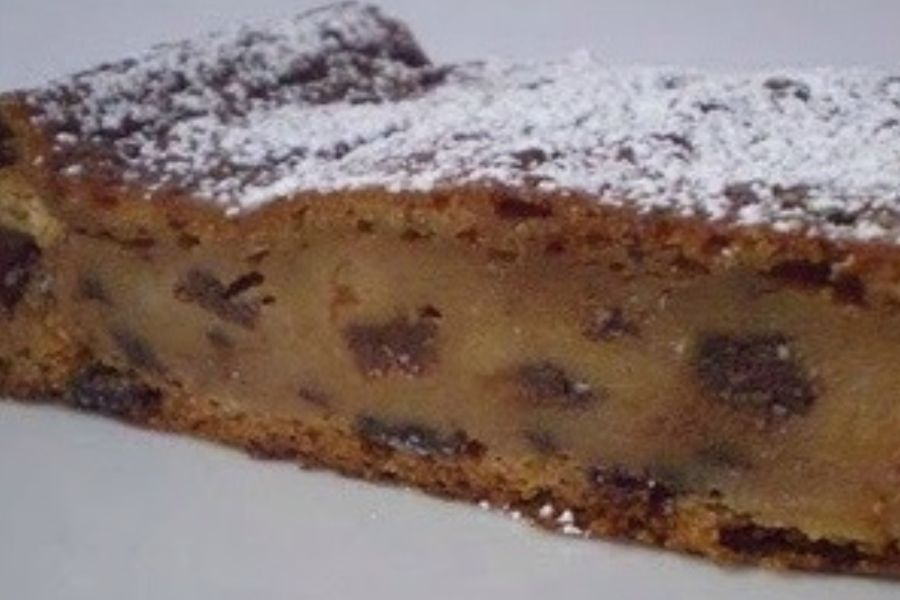
Macafame-Angeladm89, CC BY-SA 3.0 sa3.0, via Wikimedia Commons
About
THE STORY ↓
WHERE YOU CAN TRY MACAFAME IN VICENZA↓
Macafame belongs to the rural cooking of Vicenza, where yesterday’s bread was too useful to throw away. The name comes from the local verb macare, to crush or knock down, and fame, hunger. Vicenza writer Luigi Meneghello used the word to describe an action stronger than simply denting something. The Accademia Italiana della Cucina records older versions cooked in terracotta near the hearth and notes that families often distinguished their recipe with a particular liquor, from grappa to anise or rum. The recipe was not always sweet. Pietro Menegante, whose family has kept one of the best documented Vicenza versions, traces an earlier nineteenth century salty macafame served in osterie, where cheap, substantial food kept customers going between glasses of wine. His grandmother’s sweet recipe dates to the early twentieth century. The Menegante family later supplied its recipe to an early Slow Food guide to Veneto osterie. The survival story continues in Zugliano, where Panificio Rizzato has made Macafame since the bakery opened in 1978. Gambero Rosso visited in 2026 and found a system that still begins with the previous day’s unsold bread. Traditional Vicenza loaves such as cioppe, compact local bread rolls, return to the bakery and become cake with apples and raisins. The bakery has also made pear and chocolate versions, and even a savoury vegetable Macafame.
Yesterday’s bread, today’s cake Macafame belongs to cucina di recupero, the Italian practice of cooking with leftover ingredients. Bread forms the base, with fruit and other additions varying between households and bakeries.
Why do some recipes include grappa? Grappa, the Italian spirit distilled from grape pomace, is used to soak the raisins in the Menegante family’s version. Pietro Menegante also recommends combining different kinds of bread, including the ciopa, a traditional Vicenza bread roll.
His family contributed its recipe to Slow Food’s Ricette di Osterie del Veneto. Quaresime e Oriente in 1996. Their café in Zanè takes its name from the cake and continues to serve it.
The recipe varies, so ask which version you are buying. Apples and raisins are the classic combination at Rizzato, which has also made variations with pears and chocolate.
How should you eat it?
Pietro Menegante recommends eating macafame warm. Rizzato describes serving it warmed with custard in winter, or at room temperature with vanilla ice cream in summer.
A slice with coffee makes an easy introduction to the recipe. It is also worth comparing the two producers: the type of bread, fruit and flavourings can give each version a different texture and taste.
WHERE YOU CAN TRY MACAFAME IN VICENZA
FOR THE MENEGANTE FAMILY RECIPE
Via Monte Pasubio 224, Zanè, Vicenza
Phone +39 0445 714349
The Menegante family has made Macafame for generations and supplied its recipe to Slow Food decades ago. The current café, kitchen and wine bar keeps the traditional cake on the counter alongside breakfast, lunch and local dishes.
FOR THE BAKERY VERSION
Panificio Rizzato
Via IV Novembre 56, Zugliano, Vicenza
Phone +39 0445 360550
The bakery has made Macafame since 1978 and uses unsold bread from the previous day, including traditional Vicenza bread shapes. The classic version contains apples and raisins, with occasional variations such as pear and chocolate.
GOOD TO KNOW
Macafame is not tied to one season. It is traditionally a breakfast, snack or substantial sweet rather than a ceremonial dessert, and the recipe changes from baker to baker and family to family.