Home › Places › Gardens & parks › Castello di Thiene
Historic villas · Equestrian heritage in Vicenza
The 15th century villa with palatial stables
Equestrian portraits, Renaissance frescoes and gardens in a house built before Palladio
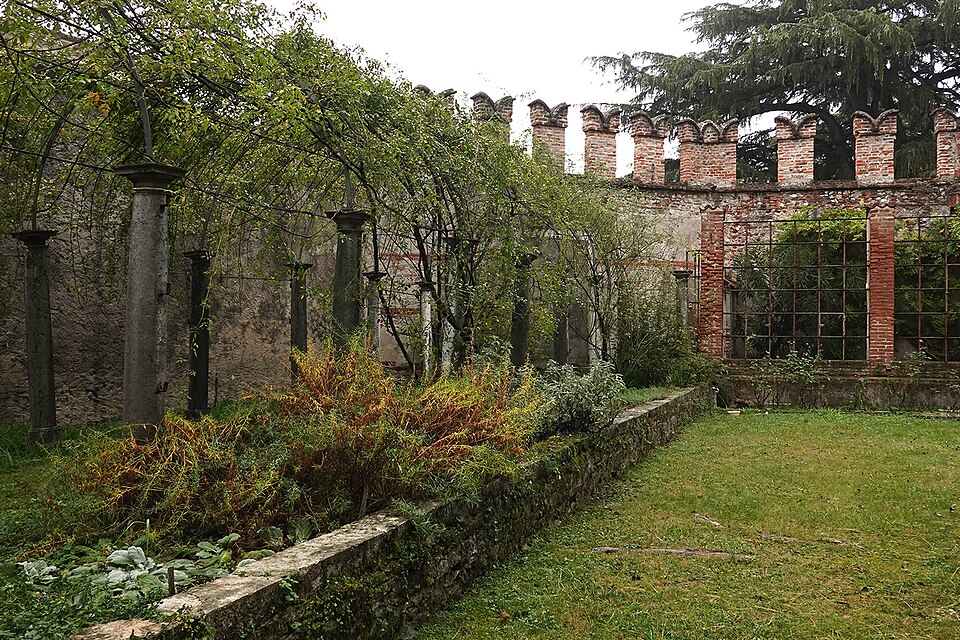
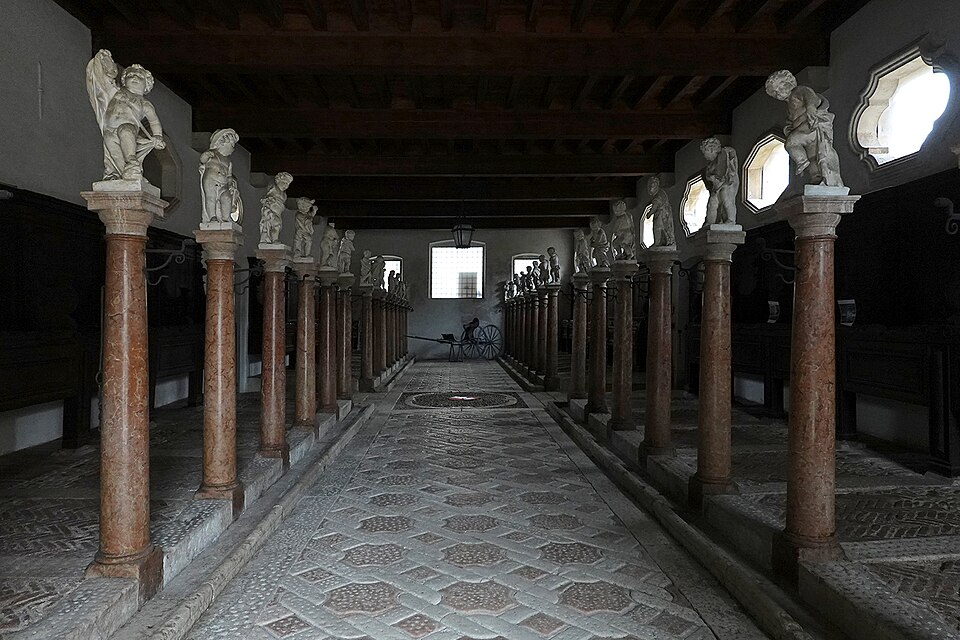
The stables are a compelling reason to include Castello di Thiene in a tour of the historic houses around Vicenza. Red Asiago marble columns, carved wooden mangers and stone cherubs decorate a building designed around 1700 to accommodate 32 horses and impress their prospective buyers. Inside the fifteenth century Venetian Gothic residence, twelve equestrian portraits hang in the upstairs gallery. Renaissance frescoes, furnished reception rooms and gardens behind the battlemented walls make the visit as rewarding for an art lover as for someone with an interest in horses.
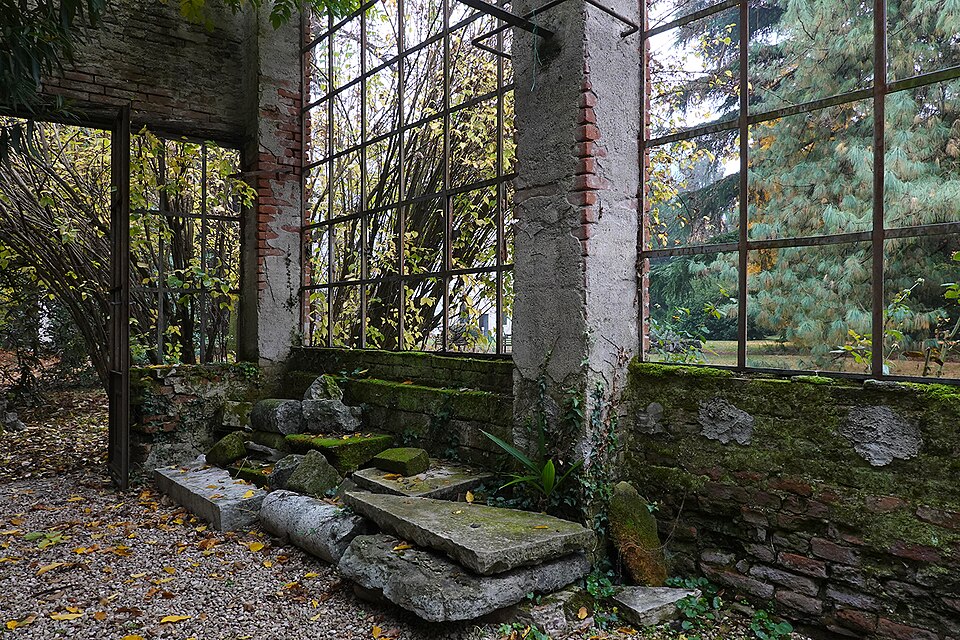
Luigi Tiriticco, CC BY 2.0 via Wikimedia Commons
Know before you go
Visit independently at weekends, or book a guided tour to see additional spaces. The Gothic chapel, historic kitchens and underground icehouse open on selected guided visits, so choose the type of visit before buying your ticket. Phone +39 329 8541962 WhatsApp +39 329 8541962 Email info@castellodithiene.com Corso Garibaldi 2, opposite Thiene’s town hall, in the historic centre. By train Take the Vicenza to Schio railway line and alight at Thiene. Parking The castle recommends car parks including Villa Fabris and Parco del Donatore. The entrance is in a restricted traffic area.
About
Before Palladio changed the idea of the Venetian villa, one family outside Vicenza was already building a country estate around land, trade and horses.
The 15th century Castello di Thiene looks like a medieval castle, with towers and battlements, but it was conceived as something more modern: a noble residence connected to a working agricultural estate. FAI describes it as a landmark in the development of the Venetian villa before Palladio.
A Venetian country house before Palladio ↓
Commissioned around 1450 by Francesco Porto, a landowner with extensive estates north of Vicenza, Castello di Thiene combined a family residence with the management of an agricultural property. Its Venetian character is visible in the pointed arches of the entrance loggia, the Gothic windows and the distinctive chimneys. A central hall connects the forecourt with the garden behind the house, while the surrounding service buildings accommodated farming, storage and estate administration. Successive generations added rooms and decoration. Around 1570, painters Giovanni Battista Zelotti and Giovanni Antonio Fasolo filled the principal reception room with scenes from Roman history, framed by painted classical architecture. The monumental stables followed around 1700, more than two centuries after the house was founded.
Evening visits
Guided evening tours take place on selected dates. Check the official calendar for the next opening and available tickets. The chapel, historic kitchens and underground icehouse open on specific guided tours. Check which rooms are included in your chosen visit.
Follow the horses
32 stalls, red marble and horses for sale
Large horses were painted on the exterior in the 16th century. Upstairs, the Gallery of Horses contains twelve large 17th century equestrian portraits, four with riders and eight with grooms, celebrating different horses associated with the estate.
32 STALLS, RED MARBLE AND HORSES FOR SALE
Built around 1700 to a design by architect Francesco Muttoni, the stables were made for 32 horses, with red Asiago marble columns, carved wooden mangers, Vicenza stone putti and a pink and white stone floor.
This was beauty with a commercial purpose. Horses were trained in the adjoining cavallerizza, then brought into these extraordinary stables where prospective buyers could see them.
Even the practical details were designed properly: sloping stone channels drained into the watercourse still running beneath the building. Outside, one stone training pillar from the old riding ground survives among the magnolias.