FOOD HERITAGE · VICENZA
Why white turnips were threaded into garlands for winter
An autumn harvest preserved for the winter table
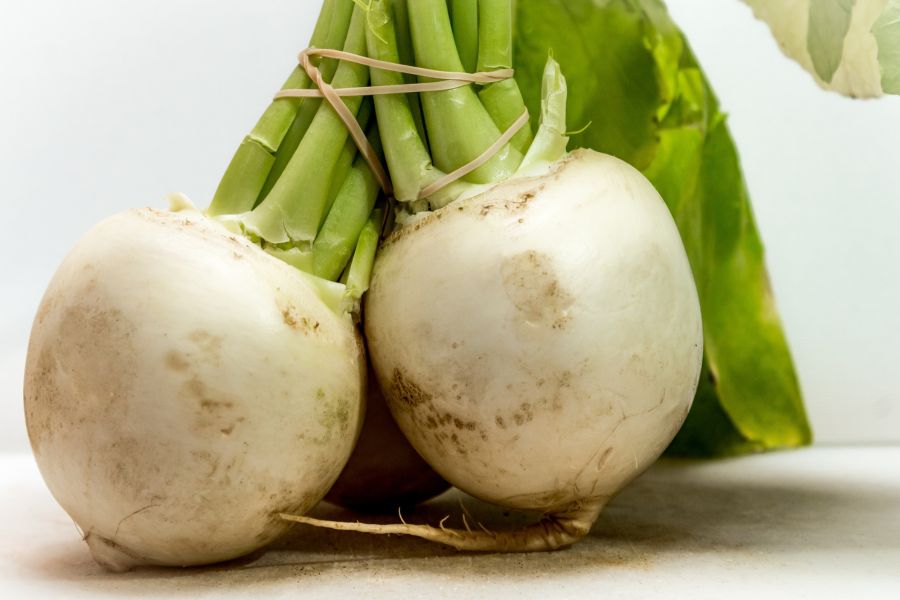
In the Agno Valley northwest of Vicenza, white turnips were sliced, threaded onto strings and hung beneath sheltered porches to dry. Known as culàti di Valdagno, they belong to Veneto’s food heritage and the history of cucina povera, Italy’s resourceful country cooking. Their story begins with an autumn harvest that had to last through winter.
You have saved two places. Leave your email and you will find them on any device, plus the next drop.
About
Before refrigeration reached the Agno Valley, white turnips were cut into thick slices, pierced with a large needle and threaded into long garlands. In Vicenza’s Agno Valley, the white turnip supplied two traditional foods: culàti, slices of the root dried for winter, and ravìsse, the leaves cooked as greens. Around Valdagno, preserving the roots involved a kitchen needle and a length of string. Families threaded the slices into garlands and hung them beneath covered porches, where the autumn harvest could spend almost three weeks drying before it went into the pantry. Officially listed among Veneto’s traditional foods (PAT), culàti di Valdagno are a rare speciality of Vicenza, Italy, with their garlands of dried white turnips recalling the ingenuity of Europe’s old country kitchens.
THE STORY ↓
WHERE TO EAT ↓
THE STORY
A kitchen needle and a length of string were once part of preparing for winter in Vicenza’s Agno Valley. Around Valdagno, families sliced white turnips into rounds and threaded them into garlands, leaving a little space between each piece. Hanging beneath a covered porch, the autumn harvest could spend almost three weeks drying before it went into the pantry.
These were culàti di Valdagno, the dried white turnips recorded among Veneto’s traditional foods. Their history belongs to cucina povera, the Italian country cooking shaped by small household budgets and the need to make a harvest last. Air and sunshine cost nothing, and drying made the vegetables lighter and less bulky to store. A sheltered porch did part of the kitchen’s work.
The turnips were small and tender, a variety called Milano, known locally as ravéte biànche, “little white turnips”. Once dried, the slices were taken off their strings and kept in closed glass jars away from the light. The regional account also calls them culàte, another name for the same preserved vegetable.
At the stove, they became culàti spaelà, “turnips cooked in a pan”. An overnight soak softened the dried slices before they went into a soffritto, a gently fried cooking base, with milk added to finish the cooking. Served alongside meat, they brought an autumn vegetable back to the winter table.
The leaves had their own place in the kitchen. Ravìsse, “turnip leaves”, were cooked in a pan and eaten as greens, giving the same crop a second use. Together, the two preparations offer a particularly intimate account of Vicenza’s food culture: what grew in the garden, what could be eaten fresh and what a household put aside for the colder months.
WHERE TO EAT
The Agno Valley’s country cooking still provides plenty of reasons to linger over lunch, from seasonal greens and polenta to fresh pasta and local salami.
Locanda Perinella, Brogliano
At Locanda Perinella, Marinella Perin’s cooking has included ravìsse, sautéed turnip leaves, alongside game, polenta and winter radicchio. The Italian Academy of Cuisine recorded that combination at a dinner here, a useful connection between the valley’s vegetable traditions and its restaurant tables. Ask about seasonal greens when booking.
Via Bregonza 19, 36070 Brogliano, Vicenza
+39 0445 947688
hotel@locandaperinella.it
Hostaria A Le Bele, Valdagno
On the road towards Castelvecchio and Marana, this former coaching stop takes its name from Bice and Giulia, two sisters remembered for their cooking and their beauty. The menu includes tagliolini, fine ribbons of pasta, with seasonal mushrooms, and baccalà mantecato, creamed cod, with crisp polenta. Its history and cooking make it a companion to a day exploring Valdagno and the surrounding countryside.
Contrada Maso 11, 36078 Valdagno, Vicenza
+39 0445 970270
LOCAL PRODUCERS & WHERE TO BUY
For enquiries about producers of culàti di Valdagno, contact Provaldagno, the local association dedicated to the town’s culture, food traditions and visitor information. Ask who prepares the dried turnip slices and whether any local shops or forthcoming food events will have them available during your stay.
Provaldagno
Palazzo Festari, Corso Italia 63
36078 Valdagno, Vicenza, Italy
Telephone: +39 377 3745989
Email: associazione@provaldagno.com
Good to know before you go
Availability is irregular, and a current serving address for culàti has not been confirmed. Contact restaurants before travelling specifically for them. The addresses above are suggestions for regional cooking; ask separately about culàti and seasonal ravisse.