ITALIAN FOOD LORE · HISTORIC DELICATESSENS
Eat traditional Italian food beneath Roman ruins
A 1971 food shop, an underground bacalà bistrot and over 450 wines.
A historic Italian delicatessen hides a restaurant beneath the street, among ancient Roman remains. Founded in 1971, Il Ceppo is recommended by Gambero Rosso International for its traditional bacalà, served in several regional recipes, from the famous slow cooked version with polenta to three varieties of whipped stockfish. Upstairs, the food shop celebrates the flavours of northern Italy, including mountain cheeses, cured meats and regional specialities. A delicious introduction to the food culture that also gave us mostarda vicentina, the fiery quince preserve traditionally eaten with mascarpone at Christmas.
You have saved two places. Leave your email and you will find them on any device, plus the next drop.
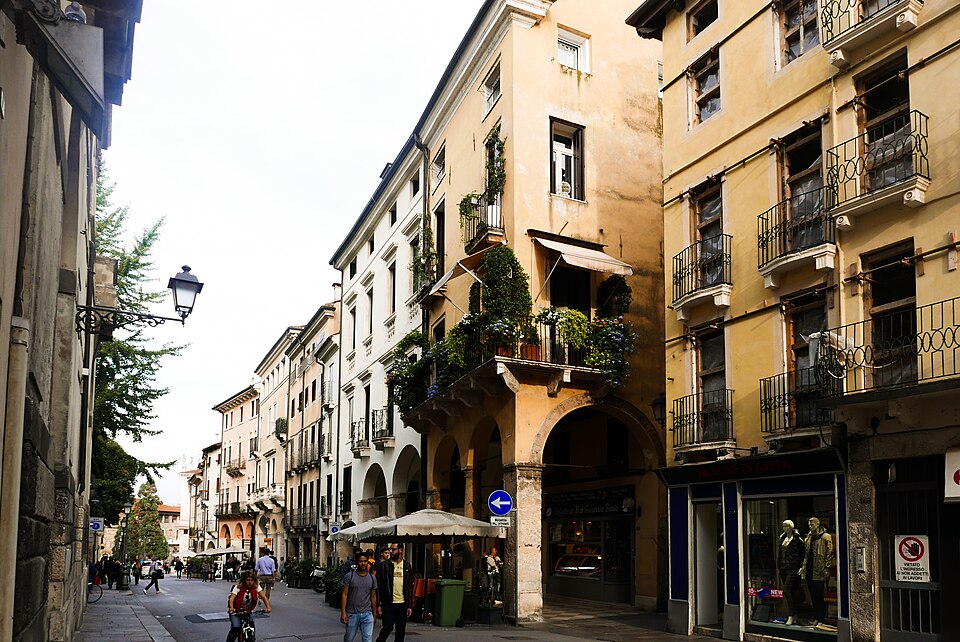
Claudio Gioseffi, CC BY-SA 4.0 via Wikimedia Commons
The Story ↓ · Mostarda Vicentina ↓ Why is it called mostarda? ↓ · The Christmas Table ↓ · The Carnival Connection ↓
The Bacalà ↓ · The SotoBotega ↓ · The Delicatessen ↓ · Plan Your Visit ↓ · FAQ ↓
THE STORY ↓
In the historic centre of Vicenza, northern Italy, Il Ceppo has an unusual arrangement: a traditional delicatessen at street level and a restaurant beneath it, surrounded by remains of Roman Vicenza. The family food shop opened in 1971, when Osvaldo Boscolo established his gastronomia on Corso Andrea Palladio. Over five decades later, Il Ceppo is both a destination for traditional Italian food shopping and a place to eat the regional dishes of Vicenza.
Gambero Rosso International includes Il Ceppo among its eight recommended restaurants for bacalà alla vicentina, the city's famous slow cooked stockfish dish, describing an entire repertoire of preparations and a substantial wine cellar.
The story begins earlier than 1971. According to the Boscolo family, Osvaldo's grandfather Bepi travelled by bicycle from the fishing port of Chioggia, carrying a thirty kilogram load of fresh fish to Vicenza. The family's trading history grew out of this pursuit of fresh seafood and carefully selected ingredients.
Il Ceppo developed from a neighbourhood food shop into a specialist gastronomia, with prepared regional dishes, cheeses, cured meats, wine and its own distinctive repertoire of recipes. In 2011, the family opened the SotoBotega, literally beneath the shop, creating a dining space among ancient Roman remains. Today, the street level delicatessen and underground bistrot offer two different ways to experience the city's food traditions.
THE MOSTARDA VICENTINA · WHY DOES ITALY PUT MUSTARD IN FRUIT? ↓
One of the most intriguing specialities of Vicenza's traditional food culture is mostarda vicentina, a thick, pale yellow preserve made with fruit, sugar and mustard.
Its name is misleading for anyone familiar with English, French or American mustard. There is no ordinary sandwich condiment here.
The defining ingredient is mela cotogna, or quince, an aromatic fruit with firm flesh that becomes soft and fragrant when cooked. Traditional recipes can also include apples, pears, candied citron, lemon and mustard essence.
The fruit is cooked, reduced to a dense consistency and combined with sugar and mustard. The result is sweet at first, followed by an unmistakable pungency that reaches the nose as well as the palate.
Unlike the better known mostarda di Cremona, in which whole candied fruits are preserved in syrup, Vicenza's version has a much more compact, almost jam like texture.
Gambero Rosso identifies mostarda vicentina among Veneto's traditional gastronomic products, while the Veneto Regional Government describes its characteristic pale yellow colour, quince content and unusual combination of sweetness and pungency.
The preserve belongs to the wider northern Italian tradition of pairing fruit with mustard, documented by international food publications including Saveur and The Guardian.
THE FOOD LORE · MUSTUM ARDENS ↓
Why is it called mostarda?
The Veneto Regional Government traces the name to the Latin mustum ardens, meaning burning must, a reference to the historical combination of grape must and pungent ingredients.
Mostarda developed from older ways of preserving fruit, when sugar, grape must and spices helped extend the life of seasonal harvests.
Quince became particularly important in the Vicenza version. The Veneto Regional Government links its spread in the region to historical trade with the eastern Mediterranean through Venice.
Over time, different parts of northern Italy developed recognisably different preparations. Cremona became associated with whole candied fruits; Vicenza with a thick quince based preserve.
The local result combines two seemingly opposing tastes: the sweetness of cooked fruit and the sharp sensation of mustard.
It is precisely this contrast that made mostarda an accompaniment to rich meats, cheeses and festive desserts.
THE CHRISTMAS TABLE · MOSTARDA & MASCARPONE ↓
In Vicenza, mostarda traditionally belongs to the Christmas table.
The Veneto Regional Government specifically records its use with mascarpone, the rich Italian fresh cream cheese, as well as with meat.
The contrast is the point. Mascarpone is soft, fatty and mildly sweet, while mostarda supplies fruit acidity, sugar and mustard heat.
A small spoonful can completely change the taste of an otherwise simple dessert.
The same principle explains its use alongside cooked meats and mature cheeses. Mostarda adds a sweet and pungent counterpoint to dishes with concentrated savoury flavours.
For travellers interested in rare regional Italian foods, it is a particularly rewarding speciality to seek out during the Christmas season.
Ask specialist delicatessens for mostarda vicentina, specifying the quince based local version. Individual shop inventories and restaurant menus can change, so confirm availability before making a special journey.
THE CARNIVAL CONNECTION · RUFIOLI ↓
The story continues beyond Christmas.
In Veneto, rufioli, also written rufioi, are traditional sweet pastry parcels associated with Carnival. Some local versions contain mostarda, making the filling a surprising combination of fruit sweetness and mustard pungency.
The Cucchiaio d'Argento publishes a recipe for baked rufioli filled with a preparation containing quince, apples, pears, candied citrus and mustard essence.
For international visitors, think of a small Italian pastry resembling a sweet raviolo, with an aromatic fruit filling that can have a distinctly sharp finish.
Recipes differ between towns and families. Some use different combinations of dried fruit, nuts, jam or mostarda.
This is another reason to explore the old pastry shops of Vicenza during Carnival, when local bakers revive sweets that rarely appear on international lists of traditional Italian desserts.
THE BACALÀ · FROM THE LOFOTEN ISLANDS TO VICENZA ↓
Il Ceppo's most firmly documented culinary speciality is bacalà alla vicentina.
Despite the name, the traditional Vicenza recipe uses dried stockfish, rather than the salted cod generally called baccalà elsewhere in Italy.
The fish has an extraordinary historical connection with northern Norway. In 1432, Venetian merchant Pietro Querini was shipwrecked in the Lofoten Islands, where he encountered the local tradition of drying cod in the Arctic air.
That encounter forms part of the history connecting Norwegian stockfish with the food culture of Veneto.
In Vicenza, the fish developed its own culinary identity. It is soaked to rehydrate it, prepared with ingredients including milk, olive oil and onions, and cooked slowly for hours before being served with polenta.
At Il Ceppo, Gambero Rosso International documents several ways of eating bacalà, including a traditional preparation with polenta and three kinds of bacalà mantecato, whipped stockfish served classic, with chives or with squid ink.
The restaurant has also offered a dedicated bacalà tasting menu.
In October 2026, founder Osvaldo Boscolo received the Collare da Nobile Cavaliere del Bacalà, an honour awarded by the Confraternita del Bacalà alla Vicentina, the brotherhood dedicated to preserving and promoting the regional dish.
THE SOTOBOTEGA · DINNER AMONG ROMAN REMAINS ↓
The restaurant's setting gives Il Ceppo a second identity beyond its food.
The SotoBotega dining space is below the historic delicatessen, among archaeological remains associated with Roman Vicenza.
The name is written in local Venetian dialect and means under the shop.
It offers a distinctive setting for lunch, dinner or a wine tasting, with an architectural connection to the ancient city beneath the present day streets.
Above ground, diners can also sit outside along Corso Andrea Palladio, the main street through Vicenza's Renaissance historic centre.
Il Ceppo's wine cellar contains more than 450 labels, according to its current official website. Sommelier recommendations are available for pairing wines with the regional dishes and seasonal menus.
The bistrot can also be reserved for private occasions, with menus and wine selections arranged directly with the restaurant.
THE DELICATESSEN · WHAT TO BUY ↓
The original gastronomia remains a practical destination for discovering regional Italian foods.
The selection includes traditional prepared dishes, cheeses, cured meats, wines and speciality grocery products.
Il Ceppo's own online shop currently lists bacalà alla vicentina, bacalà mantecato, its house giardiniera, olive oil and sopressa, the large traditional Veneto cured pork sausage.
One particularly useful option is the Box Tradizioni Vicentine, offered among the shop's selection of regional food gifts.
For travellers seeking edible souvenirs from Italy, these are documented products that can be explored before visiting.
What about mostarda vicentina?
The shop has not publicly confirmed mostarda vicentina among its current online products, and its availability at the counter or in the restaurant has not been established. Contact the delicatessen directly if you are specifically looking for the traditional quince and mustard preserve.
For a meal at the bistrot, begin with its documented bacalà specialities. For shopping, browse the delicatessen or check the online catalogue.
PLAN YOUR VISIT ↓
Where: Il Ceppo Gastronomia & Bistrot, Corso Andrea Palladio 196, 36100 Vicenza, Italy.
What to eat: Bacalà alla vicentina with polenta, varieties of whipped stockfish and the restaurant's changing regional dishes.
What to buy: Traditional prepared foods, local cured meats, cheeses, house products and regional food gifts.
Special food request: Ask whether mostarda vicentina is currently stocked. The traditional version is a quince based fruit preserve with mustard.
The setting: A street level Italian delicatessen and the underground SotoBotega restaurant among Roman remains.
Opening hours: Closed Monday. Tuesday to Friday 8:30 am to 10 pm, Saturday 8:30 am to 10:30 pm, Sunday 9 am to 7 pm, according to the official website. Confirm dining service times and holiday variations separately.
Reservations: Recommended for the bistrot, especially for dinner, groups or a particular regional dish.
Telephone: +39 0444 544414
Email: contatti@ilceppovicenza.it
FREQUENTLY ASKED QUESTIONS ↓
What is mostarda vicentina?
Mostarda vicentina is a traditional Italian fruit preserve from the province of Vicenza, made principally with quince, sugar and mustard, sometimes with additional fruit and candied citrus. It has a thick consistency, pale yellow colour and a distinctive sweet and pungent taste.
Why is mostarda vicentina spicy?
Its pungency comes from mustard. Traditional recipes use mustard essence or related mustard preparations, creating a sensation very different from the heat of chilli peppers.
How do Italians eat mostarda vicentina?
In Vicenza, it is traditionally served at Christmas with mascarpone or alongside meats. Mostarda is also used in some local Carnival pastries known as rufioli.
Where can you buy mostarda vicentina?
Ask specialist food shops in Vicenza for the quince based local variety. Il Ceppo is a historic delicatessen in the city centre, although its current stock of mostarda vicentina requires confirmation directly with the shop.
What is Il Ceppo famous for?
Il Ceppo is a historic gastronomia founded in 1971, particularly known for bacalà alla vicentina and its underground SotoBotega bistrot. Gambero Rosso International includes it in a selection of eight restaurants for the traditional Vicenza fish dish.
Can you eat among Roman ruins in Vicenza?
Yes. The SotoBotega at Il Ceppo occupies a dining space below the food shop, among remains associated with the city's Roman past.
Can you buy traditional Vicenza food to take home?
Yes. Il Ceppo offers a deli counter and an online shop selling selected traditional products, including prepared bacalà, sopressa, giardiniera and regional food gift boxes.
Sources
- Gambero Rosso International · Where to Eat Baccalà alla Vicentina in Vicenza: The 8 Best Restaurants Chosen by Gambero Rosso
- Regione del Veneto · Prodotti Tipici, Mostarda vicentina
- Gambero Rosso · Cucina veneta. L'abc dei prodotti tipici della regione
- Saveur · Mostarda di Frutta (Spicy Mustard and Fruit Preserves)
- The Guardian · Super Ingredients
- Il Cucchiaio d'Argento · Rufioli di Carnevale
- Il Ceppo · Chi siamo
- Il Ceppo · Location
- Il Ceppo · Bistrot
- Il Ceppo · Shop
- Il Ceppo · Osvaldo Boscolo insignito del Collare da Nobile Cavaliere del Bacalà
- Il Ceppo · Contatti e orari di apertura