Home › Places › Nature & trails › Falesie di Lumignano
Rock climbing and deep time in Vicenza
Climb and walk on a 30 million year old coral reef
A fossil reef south of Vicenza, with climbing walls, caves, geological trails and views across the plain.
About 12 km south of Vicenza, a wall of pale limestone rises almost directly above the village. It looks like a climbing cliff. It is also the remains of a tropical marine ecosystem formed around 30 million years ago. You can climb it, walk beneath it or follow the geological trail through the Berici Hills, where caves, ledges and fossil limestone keep the story of that vanished sea visible in the landscape.
You have saved two places. Leave your email and you will find them on any device, plus the next drop.
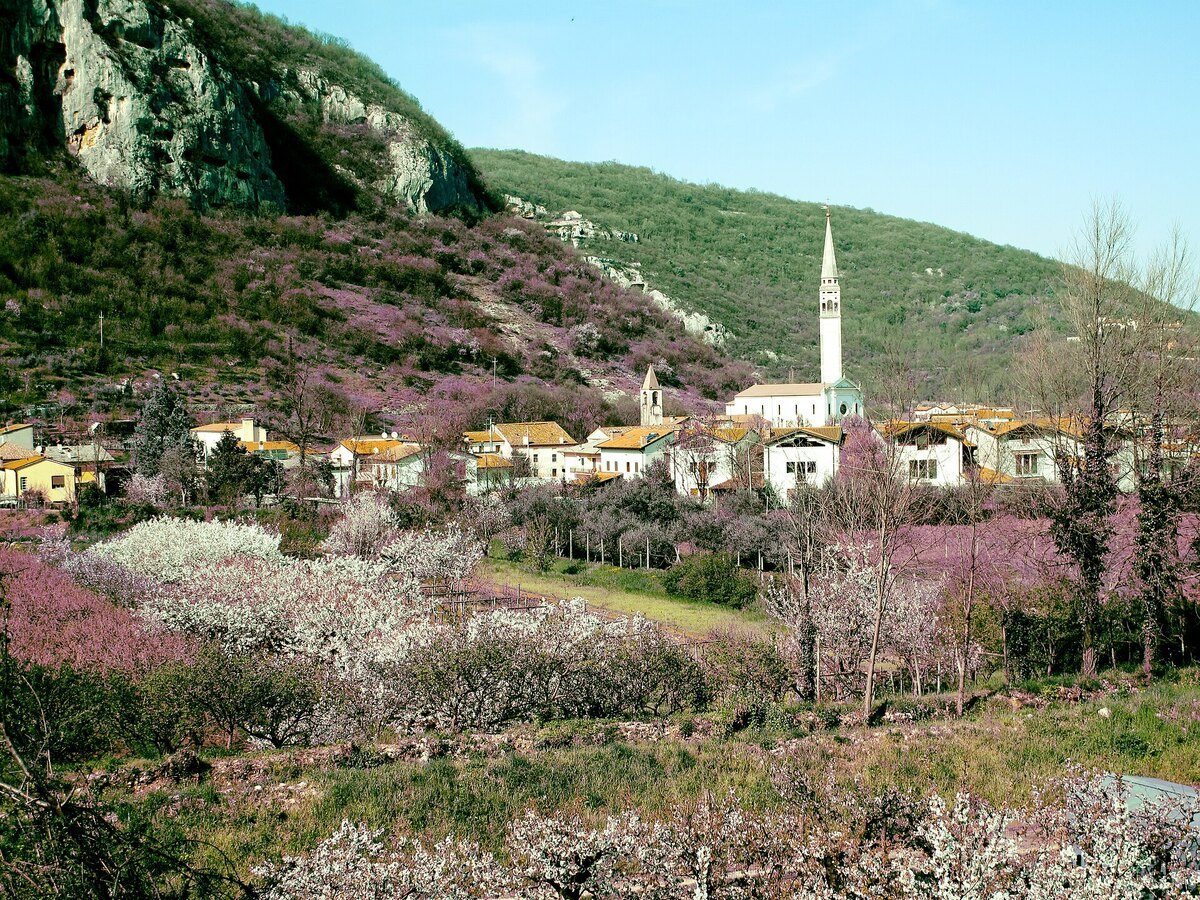
Claudio Gioseffi · CC BY-SA 4.0 · Wikimedia Commons
Know before you go
Lumignano is an outdoor climbing and walking area, not a managed attraction. Check weather, current access conditions and climbing restrictions before visiting, and use an up to date local guide for sectors and routes. Address Lumignano, 36023 Longare VI, Italy Where Berici Hills, south of Vicenza. Area Longare · Vicenza Access Free outdoor access. Use marked paths and respect private land, cultivated areas and any temporary closures. Walking You can visit without climbing equipment. Trails run beneath the limestone walls and through the surrounding hills. Climbing Use current local climbing information for sector access, grades and equipment. Conditions and restrictions can change. Best time Spring and autumn are usually the most comfortable seasons for walking and climbing. Summer Exposed sections can become very hot. Start early and bring water. After rain Rock and paths may remain slippery. Avoid steep sections in poor conditions. Footwear Walking shoes with good grip are recommended. Families Lower paths can work for families, but cliff bases and climbing sectors require close supervision. Nearby Eremo di San Cassiano and Monte Broion add caves, archaeology and rock cut architecture to the same outing. Admission Free. Booking Not required for the outdoor area. Current information Check local municipal or climbing sources before travelling.
About
→ Walk on a vanished tropical sea
The limestone above Lumignano formed when this part of northern Italy lay beneath warm marine waters. Corals and other organisms built reef structures along the edge of a carbonate platform. Over millions of years, the sea disappeared, the land rose and those deposits became the cliffs now standing above the Vicenza plain.
THE STORY
Only 12 km south of Vicenza, the plain stops abruptly at Lumignano. The small village is pressed against a long wall of pale, red and orange streaked limestone, with climbing sectors beginning almost above the houses. The surprise is what that wall actually is. Around 30 million years ago there was a warm tropical sea here. Corals grew along the edge of a carbonate platform and, after the sea disappeared and the land rose, that reef became the cliffs above Lumignano. A 2024 geological study describes the climbing walls themselves as Lower Oligocene limestone made mainly of coral boundstone, rock constructed by corals growing together in the ancient reef. So if you climb here, the holds under your fingers belong to a fossil coral reef. For climbers, Lumignano has another pedigree. It is considered one of the most important historic climbing areas in Northern Italy, with more than 300 routes from 3a to 8c+ across its different sectors. Climbing was recorded here as early as 1924, when Severino Casara climbed the route known as Sbrega. During the 1970s and 1980s the cliffs became one of the laboratories of modern Italian free climbing. Renato Casarotto, later famous for extraordinary solo climbs in the Dolomites, Andes and Patagonia, opened important routes here in the 1970s. In the following decade Lumignano attracted Heinz Mariacher, Manolo, Luisa Jovane and Martin Scheel, climbers who were pushing European free climbing into new grades and new styles. Routes such as Spigolo Casarotto, Pancia Casarotto, Atomic Café, Orient Express and Boomerang still belong to that history.
YOU DO NOT NEED TO CLIMB IT
In 2022, the Veneto Region and the University of Padua Department of Geosciences inaugurated a geological route here with an unusually literal name: “Walking on a Coral Reef.” The approximately 6 km circular walk starts in Lumignano and crosses the cliff landscape so that non climbers can read the same reef from below and above. Along the way the rock changes from fossil coral limestone to older marine layers, with karst cavities and views back across the flat Veneto plain that was once beneath the sea. That makes Lumignano unusually good even if nobody in the group owns a harness: climbers get more than 300 routes, walkers get a geological trail across the same fossil reef.
FOR CLIMBERS
More than 300 routes Grades 3a to 8c+ Historic sectors include Lumignano Classica, Brojon, Monte Croce, Dente di Lumignano and the Anfiteatro Expect slabs, pockets, vertical walls and overhangs depending on sector.
IMPORTANT, 2026
Some routes on the south and west faces of Dente di Lumignano are currently closed because of rockfall risk. CAI Vicenza published the closures in April 2026 and was still updating the notice in July. Check the current CAI Vicenza route list before climbing.
DIRECTIONS
From Vicenza, drive about 12 km south towards Longare and Lumignano. As you approach the village, the climbing cliffs are impossible to mistake: they rise directly behind the houses on the eastern edge of the Berici Hills.
For the geological walk, use Piazza Mazzaretto, Lumignano as the practical starting point. The official “Walking on a Coral Reef” circuit begins from the village and is approximately 6 km.
For climbing, park in the village and use a current Lumignano climbing guide for the correct approach to your chosen sector, because access differs considerably between the walls.