Home › Places › Unexpected Japan › The man from Vicenza who sold the world Japan’s four seasons
UNEXPECTED JAPAN · VICENZA TO YOKOHAMA
The man from Vicenza who sold the world Japan’s four seasons
From Vicenza to Yokohama and the family photo album that became a treasure of world photography
Before Japan’s cherry blossom season and autumn foliage became global travel obsessions, a photographer from Vicenza was selling hand coloured images of the country’s four seasons to international travellers. A Civil War veteran from Vicenza became one of Meiji Japan’s most celebrated photographers, selling its four seasons in hand coloured images admired by Rudyard Kipling. Discover Adolfo Farsari’s extraordinary story preserved in Vicenza, and where to find his photographs and revisit his landscapes in Japan.↓
You have saved two places. Leave your email and you will find them on any device, plus the next drop.
Adolfo Farsari, Public domain, via Wikimedia Commons
Know before you go
Check exhibitions and archive access with Palazzo Chiericati and Biblioteca Bertoliana before visiting.
About↓ · The soldier who reached Yokohama ↓ · Japan in four seasons ↓ · The family photo album that became a treasure of world photography ↓ · Why Kipling loved his photographs ↓ · Five months to rebuild what the fire destroyed ↓ · Kiku and the voyage home ↓ · PLAN YOUR VISIT ↓
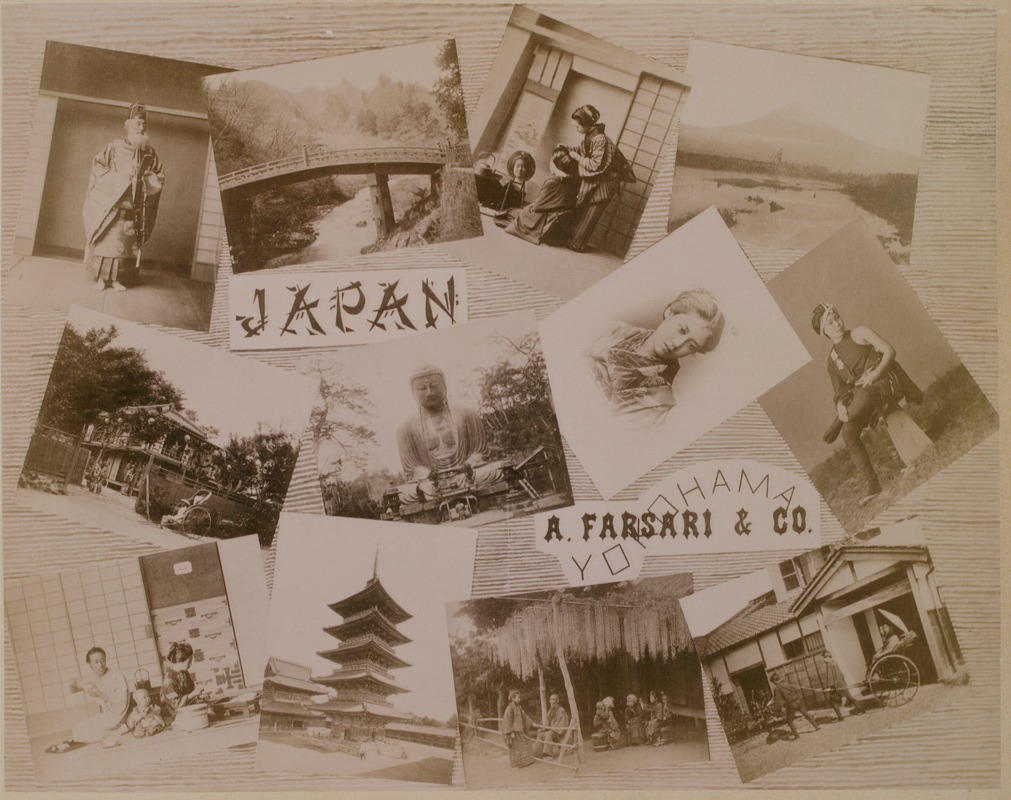
In 1888, a photographer from Vicenza was selling the four seasons of Japan in colour. Cherry blossoms for spring, iris ponds for summer, fiery red maples for autumn and fresh snow for winter. A Japanese newspaper admired the idea, international travellers bought the albums, and Rudyard Kipling would soon recommend the photographer’s Yokohama studio to his readers. [1][2] His name was Adolfo Farsari, born in Vicenza in 1841. Before making his reputation in Japan, he had fought in the American Civil War, crossed the Pacific, published Japanese travel guides and survived a fire that destroyed his photographic collection. He rebuilt the business and became one of the best known commercial photographers of Meiji Japan.
More than a century later, the photographs that helped introduce international travellers to Japan’s scenery and seasonal beauty survive in major museum collections. Vicenza preserves something particularly personal: the album Farsari sent home to his family in 1888, after twenty one years without correspondence. The story is documented through research by the University of Tokyo and exhibitions organised by the Italian Cultural Institute in Tokyo. [1][3]
THE SOLDIER WHO REACHED YOKOHAMA
Adolfo Farsari from Vicenza left Italy for the United States in 1863 and joined the Union cavalry during the American Civil War. By the 1870s, he had arrived in Yokohama, the Japanese port attracting an international community of merchants, artists, photographers and travellers. [2][3] His first Japanese business was closely connected to travel. He sold stationery, newspapers, maps, phrasebooks and practical guides for foreigners exploring a country that had only recently opened several ports to Western commerce. Among his publications was Keeling’s Guide to Japan, used by international travellers to plan visits to Kyoto, Hakone, Nikko and other destinations. Research published in the Journal of Global History documents an 1884 edition issued by A. Farsari & Co., a guide also recommended in Thomas Cook’s travel publications. [4] Farsari eventually acquired an established Yokohama photographic business, including negatives associated with Felice Beato and Baron Raimund von Stillfried, two important names in early Japanese photography. The Metropolitan Museum of Art in New York now catalogues a photographic album bringing together the names of Farsari, Beato and Stillfried & Andersen, a reminder of the complicated authorship behind nineteenth century photographic collections. [10] His business offered travellers both the information needed to explore Japan and the photographs they would take home afterwards.
JAPAN IN FOUR SEASONS
Cherry blossoms, iris ponds, red maples and freshly fallen snow.
On 8 September 1888, the Japan Weekly Mail praised Farsari’s idea of producing a photographic album devoted to the four Japanese seasons. The newspaper recognised how effectively the choice of images captured the country's seasonal identity. [1] A surviving album associated with his daughter Kiku contains photographs representing those seasons. One, titled Iris, Summer, includes Farsari himself among the people working for his company.
The seasonal album is part of Kiku's surviving family legacy in Vicenza, documented by Japanese scholar Shigetoshi Osano. It is distinct from the family album preserved at Palazzo Chiericati. The four seasons were already central to Japanese art, literature and everyday culture. Farsari's contribution was to package that visual tradition into photographs for an international travel market. Today, the Japan National Tourism Organization promotes the country with a remarkably familiar seasonal vocabulary: spring cherry blossoms, summer flowers, autumn foliage and winter landscapes. [5]
For a contemporary photography trip to Japan, the historic albums suggest a lovely way of choosing when and where to go. In spring, the old Nikko Kaido route offers a corridor of cherry blossoms leading towards Nikko, one of the great destinations photographed by nineteenth century studios. In early summer, Tokyo's Meiji Jingu Inner Garden is celebrated for its Japanese irises. The garden is a contemporary seasonal destination, rather than a documented location of Farsari’s original photographs. [6][7] Autumn brings momijigari, the Japanese custom of visiting places to admire red and golden foliage. Nikko remains especially rewarding, with ancient temples, mountain landscapes and waterfalls beneath the autumn leaves. In winter, its Senjogahara plateau offers a very different photographic landscape of snow and bare trees. [6][8]
Those modern journeys follow the four seasonal subjects celebrated in Farsari's 1888 album. They also offer a way to experience places that fascinated nineteenth century travel photographers.
21 YEARS WITHOUT A LETTER
The family photo album that became a treasure of world photography
On 17 January 1888, a letter from Yokohama arrived in the story of the Farsari family in Vicenza. Adolfo was contacting his parents after twenty one years without correspondence. He explained that he was working in Japan as a photographer and painter and promised to send them an album showing what he had made of his life so far. [1]
In September, he finally sent it.
The book was called Viste e Costumi del Giappone, “Views and Costumes of Japan”. Its wooden covers were decorated with black lacquer, mother of pearl and maki-e, the Japanese technique of applying gold or silver powder to lacquer.
Inside were photographs of Japanese landscapes, architecture and customs. The title page featured Mount Fuji, flowers and a dedication to his family written in gold. The first photograph showed Farsari himself at his office in Yokohama. His accompanying letter explained that he had hoped to make something particularly special for them, but had eventually chosen an album similar to those sold commercially, with a personalised title page and a photograph of his office.
That album survives today at the Museo Civico di Palazzo Chiericati in Vicenza, one of Andrea Palladio's celebrated buildings and the city's historic art museum. It is a fascinating reason for enthusiasts of Japanese photography to contact the museum before visiting Vicenza. The original object is part of its collection, although its present exhibition status requires confirmation. [1][15]
The album has a Japanese counterpart. Researchers have identified numerous corresponding images in Views & Costume of Japan, a commercial album held by the Yokohama Archives of History. The relationship between the two collections makes the family gift particularly valuable: an album originally sent across the world can be studied alongside photographs preserved in the city where Farsari's studio operated.
WHY KIPLING LOVED HIS PHOTOGRAPHS
Farsari's reputation rested heavily on the colour of his photographs.
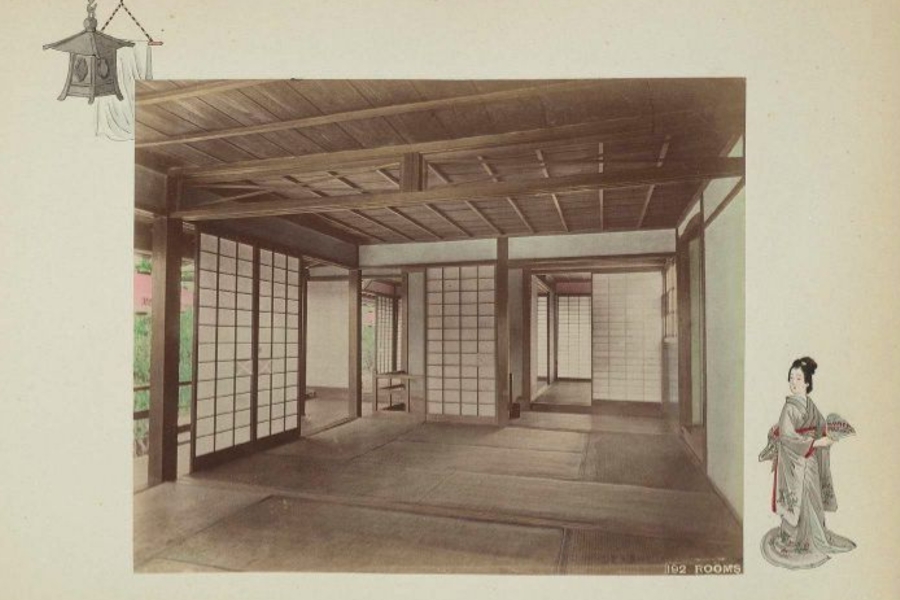
His studio belonged to the world of Yokohama Shashin, literally “Yokohama photographs”, the elaborate photographic albums produced for foreign travellers during the late Edo and Meiji periods. The photographs were printed on albumen paper and coloured individually by Japanese artists. The technique drew on the skills of painters and printmakers familiar with ukiyo-e, the woodblock prints of Japan’s floating world, and meishō-e, images of famous places.
In a letter dated February 1889, Farsari described a business employing 31 artists, printers and other workers, with a Japanese manager at its centre. [1] The finished photographs were expensive, but their colour attracted considerable admiration.
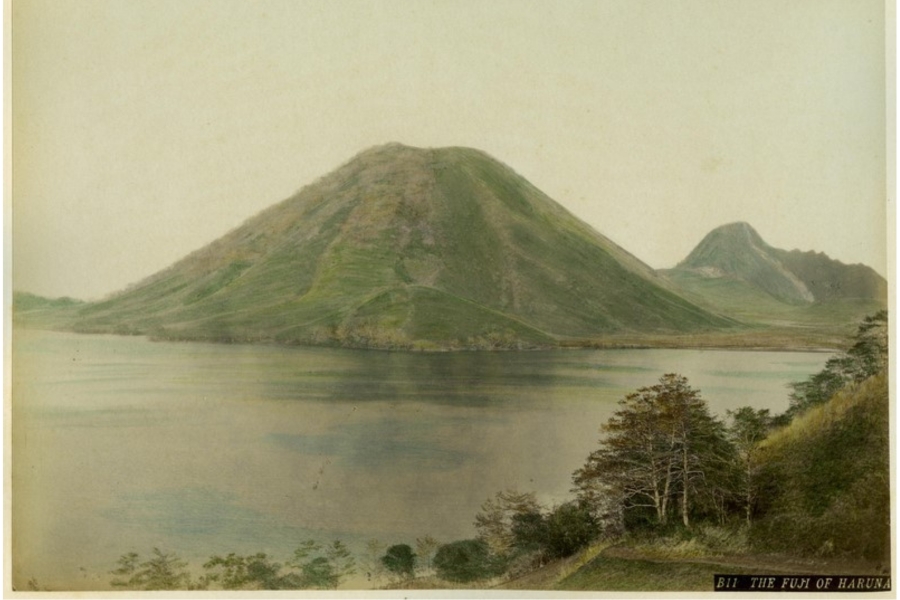
In 1889, Rudyard Kipling praised the work of A. Farsari & Co. and advised visitors to Japan to buy its photographs despite the considerable expense. He was particularly impressed by the natural colours of the landscapes, including the pink and blue tones of Japanese hills that had initially seemed exaggerated to him. [2] The studio's work could also be highly theatrical. The Museum of Fine Arts, Houston, documents photographs with staged compositions, painted scenery and additional elements, reflecting the visual culture of Japanese prints and the tastes of international buyers. [9] In 2025, the Princeton University Art Museum acquired Looking at Photographs, a wonderfully self referential image showing three women in kimono examining photographic albums. The museum's online catalogue currently lists it as on view. [11]
A photograph of people looking at photographs, produced more than 130 years before the image became a universal part of everyday life.
FIVE MONTHS TO REBUILD WHAT THE FIRE DESTROYED
In February 1886, disaster struck. A fire destroyed Farsari's photographic archive in Yokohama, including negatives accumulated through years of work and acquisitions.
Farsari set out to rebuild the collection. A notice published by his company in 1887 records five months spent travelling through Japan to produce new photographs. His business reopened with a replenished catalogue of landscapes, architecture, local customs and portraits. [1][3]
Today the Museum of Fine Arts, Houston, preserves Kirifuri Cascade, a hand coloured photograph issued by A. Farsari & Co. around 1890. Kirifuri Falls remains an accessible destination near Nikko, giving photographers the opportunity to compare an original Meiji era composition with the landscape as it appears today. [9]
KIKU AND THE VOYAGE HOME
In 1890, Farsari returned to Italy with Kiku, his young daughter from a relationship with a Japanese woman. A photograph preserved in the family material shows passengers aboard the ship Congo, including Farsari and a little girl identified as Kiku. Another photograph records her in Vicenza on 4 June 1890, shortly after she had arrived at Collegio Farina. [1]
Kiku's surviving collection includes photographs of Japan's four seasons and personal images connected to her father. Among the material are glass negatives and photographs documenting his plans for another photographic venture. Farsari hoped to return to Yokohama and develop a new business using photographs of European cities. Poor health prevented the journey. He died in Vicenza on 7 February 1898.
His sister Emma inherited his possessions and donated 255 books to the city's Biblioteca Bertoliana that same year.
Today, visitors and researchers can consult the Bertoliana's historic collections at Palazzo San Giacomo, by prior arrangement. The Farsari donation includes English language manuals on nineteenth century photographic techniques, colouring and printing, an unusually intimate record of the working interests of one of Meiji Japan's notable photographers. [14]
WHERE TO FIND FARSARI IN VICENZA & JAPAN
Across Vicenza and Yokohama, the albums preserve the images. In Nikko, the temples and waterfalls allow visitors to experience some of the landscape that made Meiji Japan such an appealing subject for early travel photography.
CAN YOU SEE FARSARI'S ORIGINAL ALBUM IN VICENZA?
The family album of 1888 belongs to the collections of Palazzo Chiericati. It is not confirmed as part of the current public display. Contact the museum in advance to ask about exhibitions or research access.
MUSEO CIVICO DI PALAZZO CHIERICATI
Piazza Matteotti 37, 36100 Vicenza, Italy.
+39 0444 222811; museocivico@comune.vicenza.it
CAN YOU CONSULT HIS PHOTOGRAPHIC BOOKS?
The Biblioteca Bertoliana preserves the Farsari donation. Historic materials can be requested for consultation in the Sala Riservata at Palazzo San Giacomo, with advance arrangements.
BIBLIOTECA CIVICA BERTOLIANA
Palazzo San Giacomo, Contrà Riale 5, 36100 Vicenza, Italy.
+39 0444 578215; settoreantico.bertoliana@comune.vicenza.it
WHERE CAN YOU FIND HIS PHOTOGRAPHS IN JAPAN?
Yokohama Archives of History preserves three albums associated with his studio. The Yokohama Museum of Art holds photographs attributed to him. Contact the institutions to confirm current exhibitions or collection access.
Yokohama Archives of History
Yokohama Museum of Art
WHERE CAN YOU REVISIT HIS PHOTOGRAPHIC LANDSCAPES?
Nikko, in Tochigi Prefecture, offers some of the most recognisable landscapes and monuments represented in nineteenth century Japanese photography.
The Toshogu shrine and Kirifuri Falls are practical starting points. Check the official Japan National Tourism Organization information for current access, seasonal conditions and photography advice.
Sources
- Biblioteca Civica Bertoliana · Dono Farsari
- Finestre sull’Arte · Un avventuriero italiano nel Giappone di fine Ottocento
- Istituto Italiano di Cultura di Tokyo · Adolfo Farsari
- Museum of Fine Arts, Houston · Untitled
- Yokohama Archives of History · Photo Albums
- Yokohama Museum of Art · Ise, Geku, Gate
- Smithsonian National Museum of Asian Art · Photo Album from the Studio of Adolpho Farsari
- Princeton University Art Museum · Looking at Photographs
- Biblioteca Civica Bertoliana · Accesso alla Sala Riservata
- Japan National Tourism Organization · Kirifuri Falls