Home › Places › Unexpected Japan › Chanoyu Vicenza · Makiko Wakita
UNEXPECTED JAPAN · CHANOYU & MATCHA
Why did a Japanese tea master help build a tea room in Vicenza?
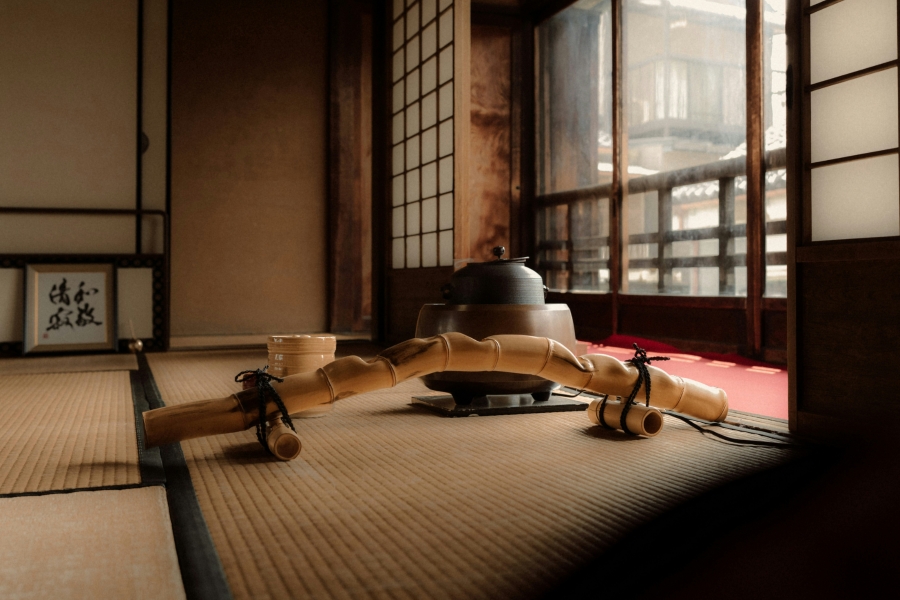
Learn the Japanese Way of Tea inside a real chashitsu
Since 1987, Makiko Wakita has studied the Japanese tea ceremony under Omotesenke master Kazuie Murayama. He later helped complete the traditional tea room she built in Vicenza, Italy. Today, visitors can book a chanoyu experience with ceremonial matcha and handmade seasonal wagashi. Discover the art, the Japanese master behind the room, and where to experience it in Vicenza, including special ceremonies in historic Italian villas. [1][2][9]
You have saved two places. Leave your email and you will find them on any device, plus the next drop.
rod-long-unsplash
Know before you go
About ↓ · The Japanese master behind the tea room ↓ · What is chanoyu? ↓ · Four seasons, one bowl of tea ↓ · Japanese sweets you can make ↓ · Where to experience chanoyu in Vicenza ↓ · Tea ceremony in an Italian villa ↓ · Plan your experience ↓
About
A Japanese tea master helped finish a traditional chashitsu, or tea room, in Vicenza. His student, Makiko Wakita, now teaches visitors how to take part in chanoyu, the centuries old Japanese art of preparing, serving and receiving matcha. [1][2] Born in Kobe, Wakita began studying under Kazuie Murayama in 1987. After moving to Italy in 1996, she founded Chanoyu Vicenza in 2009 and created a tea room built according to Japanese architectural traditions. Visitors can book an introductory workshop, learn the etiquette of receiving tea and taste matcha with a handmade Japanese wagashi. Wakita also teaches the art of making the seasonal sweets herself. [5][7] For travellers interested in authentic Japanese experiences in Italy, this is an opportunity to experience a living tradition with someone who has practised it for nearly forty years.
THE JAPANESE MASTER BEHIND THE TEA ROOM
Kazuie Murayama is a Japanese teacher of Omotesenke, one of the three principal tea traditions descended from Sen no Rikyū, the sixteenth century master who profoundly influenced the Japanese Way of Tea. [3] Murayama taught Wakita in Japan, and their relationship continued after she moved to Europe. In 2008, the two appeared together at the Higan festival in Italy, demonstrating chanoyu and teaching visitors how to behave as guests at a Japanese tea ceremony. [4] His involvement in Vicenza went considerably further. When Wakita created her own chashitsu in 2009, the construction required careful planning, traditional materials and specialist craftsmanship. Murayama personally contributed to its finishing details. [2] The room now hosts lessons in the Omotesenke tradition, connecting a Japanese teacher, his student and the centuries old tea culture of the Sen family with an address in northern Italy.
WHAT IS CHANOYU?
Chanoyu (茶の湯) literally means “hot water for tea”. The practice is also called chadō (茶道), the Way of Tea.
Its most important figure, Sen no Rikyū (1522–1591), served two of Japan's most powerful rulers, Oda Nobunaga and Toyotomi Hideyoshi. He developed wabi-cha, an approach to the tea ceremony associated with restrained aesthetics, carefully chosen utensils and the relationship between host and guest. [3] In a ceremony, the host cleans and arranges the utensils, measures powdered green tea with a bamboo chashaku, prepares it in a chawan tea bowl and uses a bamboo chasen to whisk the matcha with hot water. The guest has an equally important role. At Chanoyu Vicenza, Wakita begins by teaching newcomers how to receive tea, appreciate the utensils and follow the etiquette of the ceremony. Her first five lessons concentrate on being a guest before progressing to the preparation of tea. [5] A beginner can experience the ceremony without committing to years of study, while more dedicated students can follow the Omotesenke curriculum.
FOUR SEASONS, ONE BOWL OF TEA
Japan's four seasons are part of chanoyu itself. According to the Omotesenke tradition, the tea calendar begins anew in November, when the hearth is opened and a fresh jar of tea is unsealed. In May, the ceremony moves to the furo, a portable brazier. Flowers, utensils and the sweets offered to guests change with the season. [6] Camellias belong to the colder months. Summer brings irises and other seasonal flowers. The choice of a tea bowl or sweet can refer to a particular month, landscape or Japanese celebration. The result is an experience that changes throughout the year. At Chanoyu Vicenza, Wakita also makes seasonal Japanese sweets, giving visitors another way to discover the relationship between Japanese food, flowers and traditional aesthetics.
JAPANESE SWEETS YOU CAN MAKE
A matcha ceremony is also an introduction to wagashi (和菓子), traditional Japanese sweets that are often shaped to resemble flowers, leaves and other seasonal motifs. Wakita has studied the art of nerikiri, a refined form of Japanese confectionery, with master Junichi Mitsubori, founder of the Ichika school in Japan. [1][7] The sweets can resemble miniature sculptures, with petals, colours and forms inspired by the Japanese seasons. At Chanoyu Vicenza, her wagashi workshop lasts approximately 90 minutes. Participants learn about the ingredients and techniques, prepare three types of Japanese sweets and enjoy them with matcha. [7] An appealing experience for anyone interested in Japanese pastry, edible art, matcha and traditional Japanese craftsmanship.
WHERE TO EXPERIENCE CHANOYU IN VICENZA
The most direct way to experience Wakita's teaching is to book an introductory workshop at Chanoyu Vicenza. The session begins with the etiquette of receiving tea. Visitors then enter the traditional tea room, watch the preparation and drink matcha accompanied by a Japanese sweet. The school requests reservations at least three days in advance. Its published teaching programme includes Saturday afternoon and Monday morning lessons, with beginners and experienced students practising together. [5] The private tea room's street address is supplied through the booking arrangements. For visitors wishing to study beyond a single session, the school also offers a longer path through Omotesenke practice, including the possibility of qualifications issued through the Japanese school, subject to the teacher's assessment.
TEA CEREMONY IN AN ITALIAN VILLA
On 29 March 2026, Makiko Wakita brought the Japanese Way of Tea to Villa Priuli Crisanti, a historic Italian villa in the Vicenza countryside. The afternoon included an explanation of the ceremony, a traditional demonstration and ceremonial matcha served with a Japanese sweet. The event welcomed adults and children aged eight and over. Tickets were €25 for adults and €15 for children. [9] The villa, in Villa del Ferro, belongs to a historic architectural complex attributed to Vincenzo Scamozzi and preserves artworks including frescoes by Giandomenico Tiepolo.
The 2026 tea ceremony has concluded. Contact the villa or Chanoyu Vicenza for future Japanese cultural events. The property can also be visited independently through guided tours by reservation, regardless of the tea ceremony programme. [10]
PLAN YOUR EXPERIENCE
CAN YOU TAKE PART IN A JAPANESE TEA CEREMONY IN VICENZA? Yes. Chanoyu Vicenza offers introductory workshops in a traditional Japanese tea room, along with lessons in the Omotesenke tradition. Advance booking is required.
CHAN OYU VICENZA Maestra Makiko Wakita Vicenza, Italy. Exact tea room address confirmed when booking. Phone: +39 349 8174257 , Email: chanoyuvicenza09@gmail.com
CAN YOU MAKE JAPANESE WAGASHI? Yes. Wakita offers separate workshops in traditional Japanese confectionery, including seasonal sweets inspired by flowers and nature. Contact her for the next dates.
WHERE WAS THE 2026 VILLA CEREMONY HELD? Villa Priuli Crisanti, Vicenza. Phone: +39 348 4797441; Email: villa@capriulivilladelferro.it
Sources
- Chanoyu Vicenza · Chi sono
- Chanoyu Vicenza · La stanza del tè
- Omotesenke Fushin’an · Rikyu’s Chanoyu and Its Lineage
- Higan · La poesia della natura
- Chanoyu Vicenza · La via del tè
- Omotesenke Fushin’an · Tea Gatherings Through the Four Seasons
- Chanoyu Vicenza · Wagashi Dolci giapponesi
- Omotesenke Fushin’an · Sweets for Chanoyu
- Villa Priuli Crisanti · Cerimonia del Tè Giapponese con Makiko Wakita
- Villa Priuli Crisanti · Visite
- テーブルスタイル茶道 椿の会 · 講師一覧 脇田眞規子