Home › Places › Villas & Palaces › Villa Fracanzan Piovene
HISTORIC HOUSE, KITCHEN AND RURAL LIFE NEAR VICENZA
A Renaissance sink hidden from Napoleon, an intact villa kitchen and Italy’s first woman newspaper editor
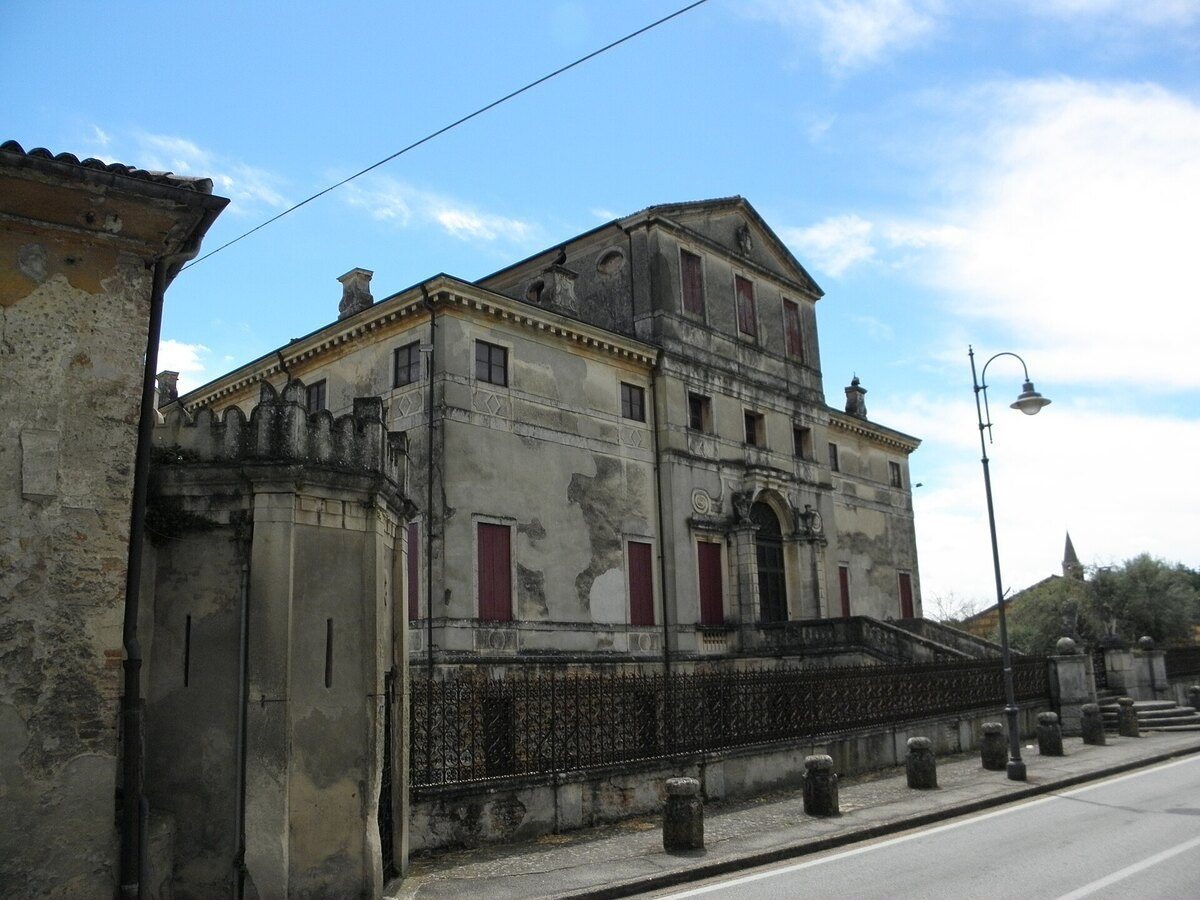
An eighteenth century estate where the kitchen, granaries, farm workshops and agricultural machinery still explain how a Venetian country house actually worked.
The kitchen still has its original fittings, hundreds of utensils and a sixteenth century red Verona marble sink that, according to local tradition, was dismantled and buried when Napoleon’s troops arrived. Upstairs are formal rooms, four poster beds and a ballroom; outside, the long agricultural wing preserves granaries, farm workshops and early tractors.
You have saved two places. Leave your email and you will find them on any device, plus the next drop.
Threecharlie · CC BY-SA 4.0 · Wikimedia Commons
Know before you go
Opening hours, access and prices can change, and some of these places open only by arrangement. Please check with the place before you travel.
About
THE KITCHEN ↓
THE JOURNALIST ↓
THE WORKING ESTATE ↓
VISIT ↓
THE KITCHEN
Villa Fracanzan Piovene was begun in 1710 for a Vicentine family established at Orgiano since the fourteenth century. Francesco Muttoni, the Lugano born architect who studied Palladio closely, designed a Baroque country house while incorporating parts of the older medieval estate. His original drawings survive today in the Library of Congress in Washington and in Italian private archives.
The kitchen is the room to spend time in. Its furnishings and utensils remain largely in place, from copper pans and moulds to ladles, chopping boards and roasting equipment. Even the smoke darkened vaults preserve the evidence of use.
At its centre is a sixteenth century sink in red Verona marble, traditionally attributed to the Veronese artist and architect Paolo Farinati. Local tradition says Napoleon wanted it for the Louvre; during the French occupation it was dismantled and hidden to keep it from leaving the house.
THE JOURNALIST
The villa was also part of Vicenza’s Enlightenment world.
Elisabetta Caminer Turra, the Venetian born writer, translator and editor who became one of the pioneering women of Italian journalism, spent long periods here. In 1777 she became the first woman in Italy known to have directed a newspaper, the Giornale Enciclopedico, and later continued her publishing work in Vicenza. The villa remembers a period when a country house could be both agricultural estate and intellectual salon.
THE WORKING ESTATE
The twelve arch barchessa, the long agricultural wing characteristic of Venetian villas, survives with two large granaries, the farmer’s house and a carpenter’s workshop.
Today these spaces form the Museum of Daily Life and Work in the Villa. The granaries contain nineteenth century tools, while a rare collection of early agricultural engines and tractors follows the mechanisation of farming over the last hundred years.
The park extends beyond the formal Italian garden into long avenues, old fish ponds, woodland and cultivated land, preserving the connection between the house and the agricultural landscape that supported it.
VISIT
Individual visitors can currently enter on Sundays and public holidays from April to October, from 15:00 to 19:00. Interior visits are guided and last about one hour; the park and garden can be visited independently.
The 2026 adult ticket is €12. Groups of more than twenty can arrange visits throughout the year.
CONTACT
+39 335 8221426
info@villafracanzanpiovene.com