He began with Antonio Pigafetta.
When Gabriel García Márquez walked into the Swedish Academy in 1982 to accept the Nobel Prize, he could have begun anywhere.
He began with Antonio Pigafetta.
A young traveller from Vicenza, far from the ranks of professional sailors, had crossed the globe with Magellan and written impossible things: strange animals, giant figures in Patagonia, islands, rituals, hunger, violence, weather, fear and wonder, and a reality so excessive it already behaved like literature.
The Solitude of Latin America
García Márquez built his entire lecture, titled “The Solitude of Latin America,” around this exact observation.
He paid homage to Antonio Pigafetta during the two main formal events of his Nobel week.
First, during his Nobel Lecture on December 8th, titled “The Solitude of Latin America,” the Colombian author opened his speech by reading the specific, surreal observations recorded in Pigafetta’s 16th-century logbook.
He shared the young Italian's descriptions with the Academy: pigs with navels on their haunches, clawless birds that laid eggs on the backs of their mates, and a creature with the head of a mule, the body of a camel, and the legs of a deer.
Then, on the evening of December 10th, 1982, in front of a formal European audience at the grand award ceremony, he broke strict Nobel protocol by wearing a traditional white Caribbean liquiliqui instead of the mandatory black tuxedo.
By grounding his entire Nobel presence in Pigafetta's archival observations, García Márquez argued that Latin American reality was not a fantasy invented by contemporary writers, but a literal chronicle of a world out of proportion since the Age of Discovery.
The modern power of Pigafetta
That is the modern power of Pigafetta. He sailed out of curiosity and, as he openly admitted, out of a young man's desire to be remembered by posterity.
It is the pull every traveller still feels, the urge to look at the world and refuse to find it ordinary.
At the beginning of his diary, Pigafetta speaks to the curious readers of his own age, people eager for the marvels he had seen and suffered, and for the means, ways and routes that had taken him there.
He was writing for them. The diary found everyone else: readers across countries, centuries and languages, still asking what travellers have always asked, what did you see, what did it cost, and how did you get there?
Which is to say: the creator economy, five hundred years early.
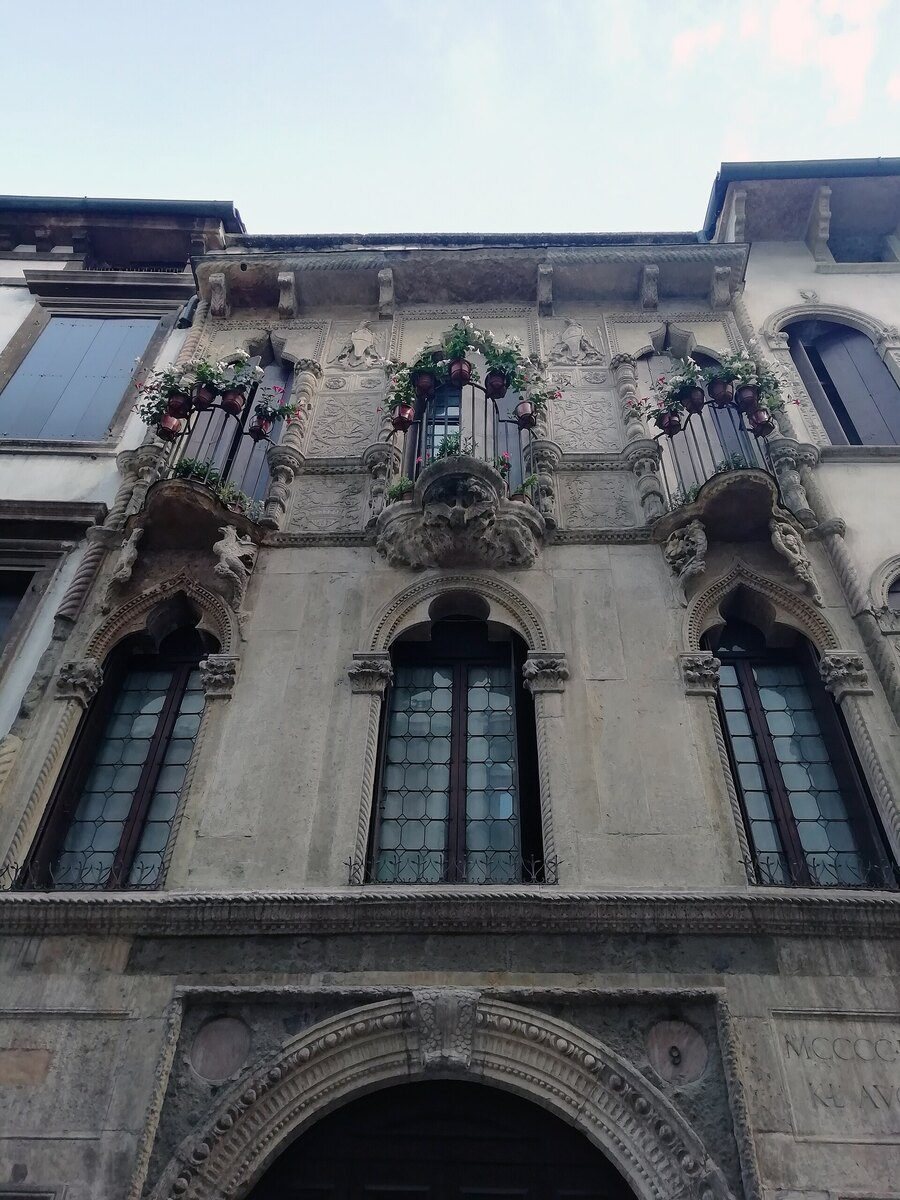
In Vicenza, that legacy is still attached to a real street, a Gothic house and a carved motto, one more unexpected reason to visit a city that has always been larger than its postcard.
SOURCE AND CURRENT INFORMATION
- Nobel Prize · Gabriel García Márquez, Nobel Lecture, 1982
- Fundación Gabo · La soledad de América Latina
- Library of Congress · Journal of Magellan’s Voyage
- Yale Beinecke Rare Book & Manuscript Library · Antonio Pigafetta manuscript
- American Heritage · Magellan’s Voyage
- Granta · The Solitude of Latin America
- The Washington Post · Nobel ceremony report, December 1982