Home › Places › Museums & antique books › Museo del Priaboniano “Renato Gasparella”
WHEN VICENZA WAS A TROPICAL SEA
This tiny Vicenza village gave its name to 3.8 million years of Earth history
Shark teeth, an ancient dugong and the fossils behind a name still used by geologists worldwide
Priabona is a small village in the Vicenza hills with an unusually large place in geological history. In 1893, two French geologists took its name for the Priabonian, the final age of the Eocene, still used internationally today. The fossils found around the village record the tropical sea that covered this part of Vicenza around 35 million years ago.
You have saved two places. Leave your email and you will find them on any device, plus the next drop.
Thomas Marchiorato · CC BY-SA 4.0 · Wikimedia Commons
Know before you go
The museum is currently listed as closed for refurbishment. Check the official museum before travelling; groups and school visits are normally available by arrangement.
About
When Vicenza had sharks and dugongs
About 25 km north of Vicenza, Priabona is a small hill village at a pass between the Agno and Leogra valleys. Its name, however, appears in geology textbooks and scientific papers around the world. In 1893, French geologists Ernest Munier Chalmas and Albert de Lapparent studied the rock layers exposed here and named the Priabonian after the village. Today the International Commission on Stratigraphy still uses Priabonian for the final age of the Eocene, from 37.71 to 33.9 million years ago. The formal starting point was fixed elsewhere in Veneto in 2020, at Alano di Piave, but the geological age kept Priabona’s name. These hills were under a warm tropical sea, inhabited by sharks, ancient relatives of dugongs, corals, crabs, sea urchins and microscopic foraminifera whose fossils helped geologists date the rocks.
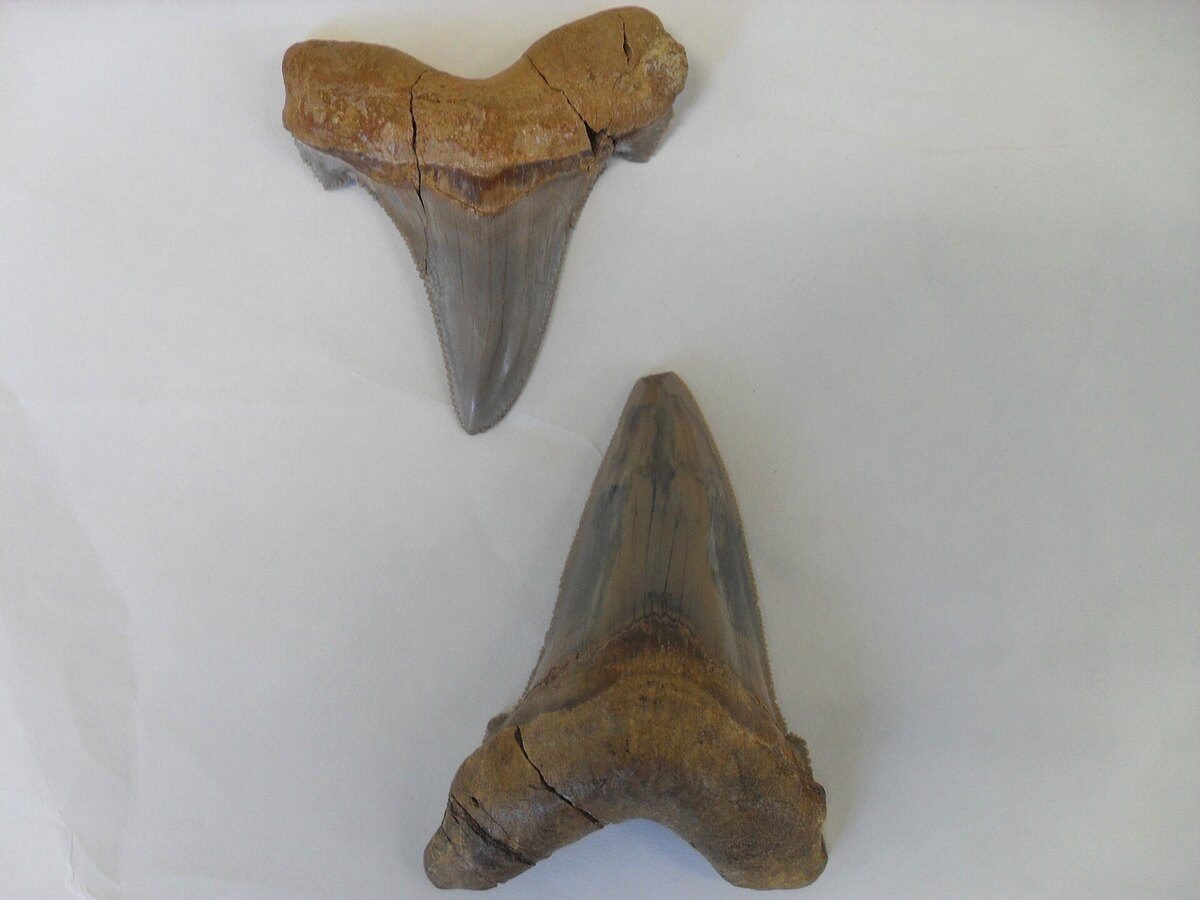
Inside the museum, more than 500 objects found in the surrounding territory make that vanished sea unexpectedly tangible. Look for a partial Eocene dugong skeleton, fossil shark teeth and a life size reconstruction of an Otodus predator, a newly identified fossil crab, and a 40 million year old fossil Ficus trunk described by the museum as the oldest known in Europe. When Vicenza had sharks and dugongs
FIND THE GEOLOGICAL AGE OUTSIDE
The best part is that the story does not stop at the display cases. A marked walking route from Priabona towards Faedo crosses an actual fossil bearing site. An official identification guide shows what to look for in the exposed rock, including corals, bryozoans, pectinid shells, Discocyclina, Asterocyclina and shark teeth. So you can learn what “Priabonian” means inside the museum, then walk outside and find the evidence in the hillside that gave an age of the Earth its name.
WHY GO
Because few villages can claim something this strange: Priabona became a word used by geologists worldwide, and the tropical sea behind that word is still readable in the rocks around the village.
GOOD TO KNOW
The museum has guided visits, a paleontology laboratory and activities in which participants examine microfossils and use palaeontological tools. The more extensive practical labs are currently designed mainly for school groups. Independent visitors can use the official fossil identification trail outside. CHECK CURRENT STATUS until reopening is confirmed.
FROM VICENZA
Priabona is around 25 km from Vicenza, approximately 30 minutes by car, in the hills above Malo. The museum occupies the former village elementary school at the Priabona Pas