Home › Places › Nature & trails › Grotte di Oliero · Grotta Parolini
CAVE BOAT TRIP · VICENZA VALBRENTA
Take a boat into one of Europe’s great karst springs
A guided boat visit inside Grotta Parolini, with a 14 metre wall of white stalactites
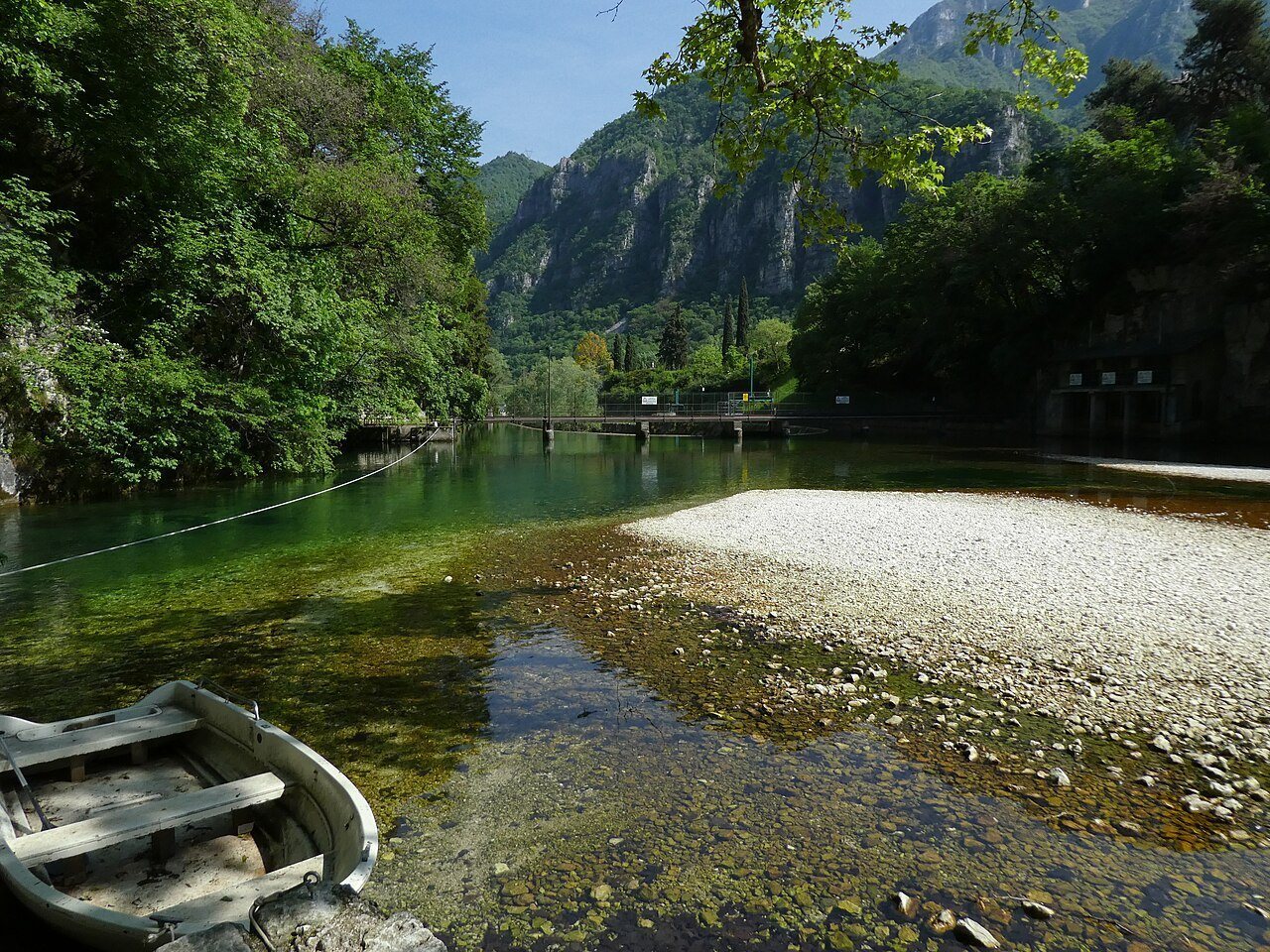
In the narrow Valbrenta north of Vicenza, the Oliero River appears from beneath the Asiago Plateau through one of Europe’s great karst spring systems. At Grotta Parolini, the visit begins in a small wooden boat, crossing the underground water before continuing on foot to the Sala della Colata and its 14 metre cascade of white calcite.
You have saved two places. Leave your email and you will find them on any device, plus the next drop.
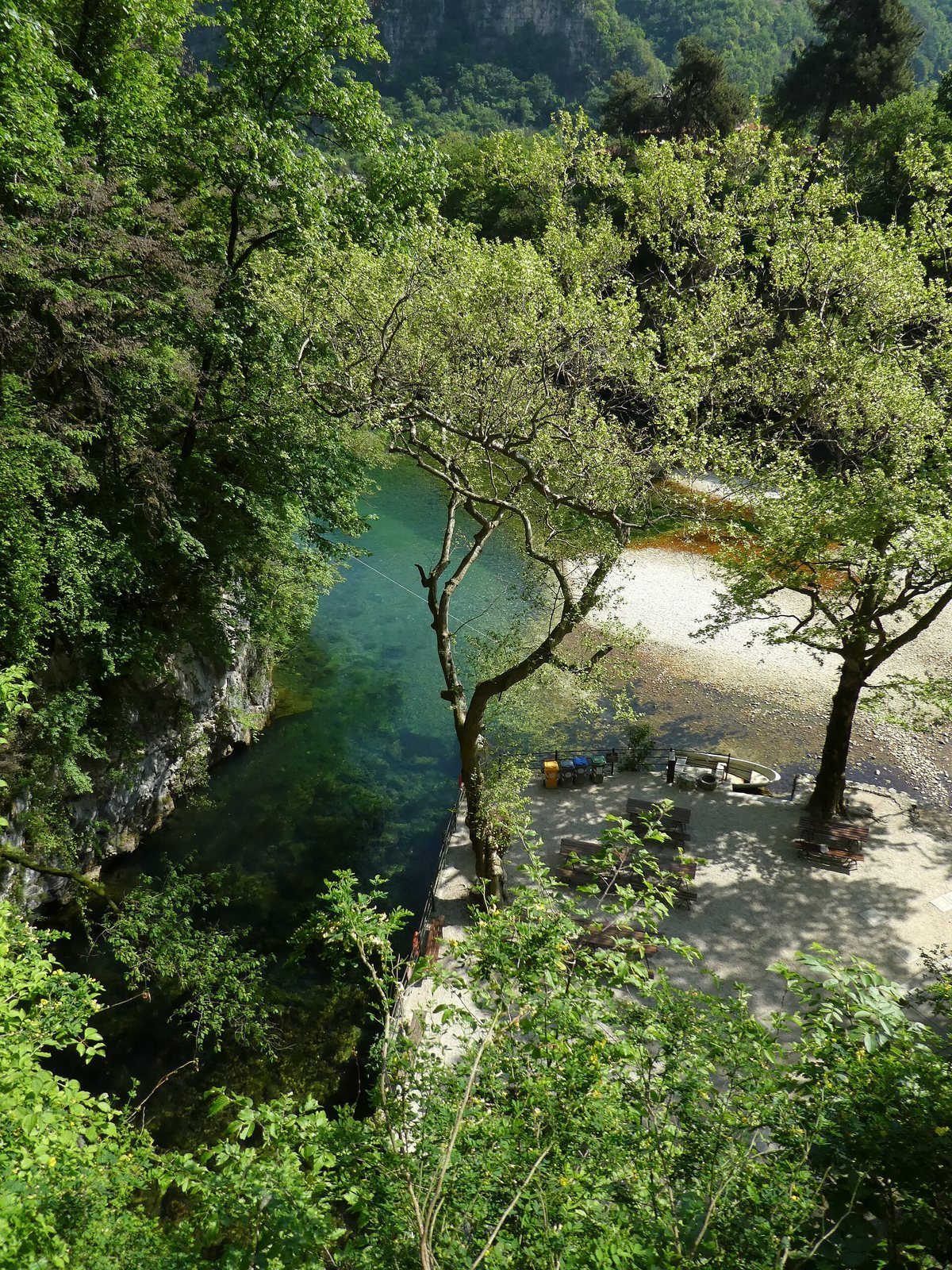
Syrio · CC BY-SA 4.0 · Wikimedia Commons
Know before you go
Grotta Parolini is reached by boat and water levels matter: heavy rain can alter or suspend cave access. Individual visitors do not need to book; boats leave continuously according to visitor numbers. Carpanè–Valstagna station · approximately 1.5 km riverside walk to the caves
About
The Oliero is a very short river with an unexpectedly large beginning. Its water has travelled underground through the limestone of the Asiago Plateau before emerging at the foot of the mountain in Valbrenta, a few kilometres north of Bassano del Grappa. The Regione Veneto describes these as the largest Vauclusian, or deep karst, springs in Europe.
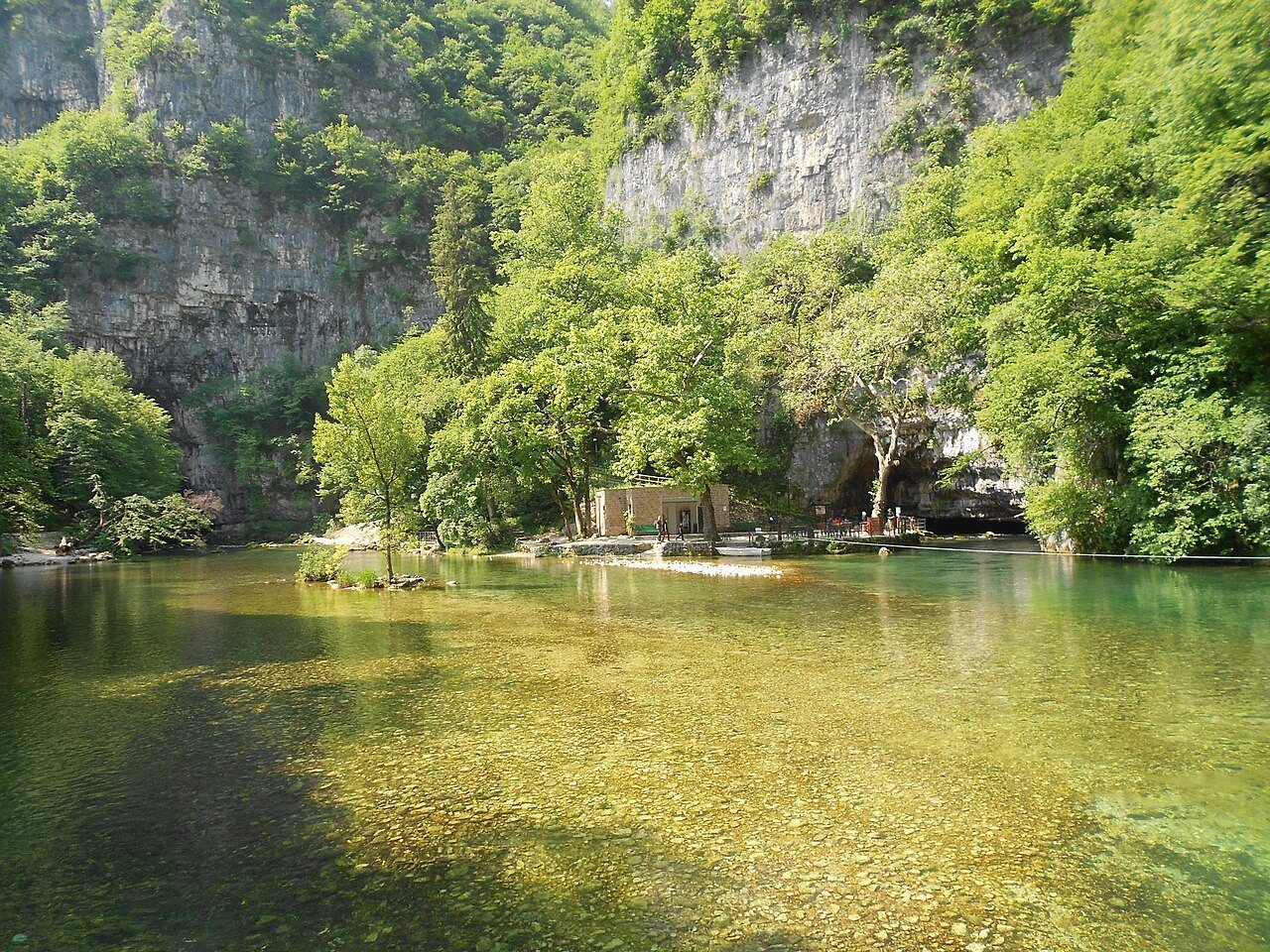
Four caves open around the springs. Two lower caverns still release the Oliero today; two higher covoli, the local name for these rock shelters and caves, mark older outlets abandoned as the underground water found lower routes through the mountain.
The cave you can visit by boat is Grotta Parolini, or Covol dei Siori.
Into the mountain ↓
The boat into Grotta Parolini
The entrance is low enough that passengers are told to keep their hands inside the boat and lower their heads. A guide takes the small wooden craft across the spring water into the cave; once inside, the visit continues on foot. The complete guided cave visit takes around 20 to 30 minutes.
This is one of the two active springs from which the Oliero emerges. The water outside is part of the same underground system you have just crossed, so the boat ride makes the geology unusually easy to understand: the river effectively begins beneath you.
Inside, the temperature remains around 12°C throughout the year. Even in August, bring a light jacket.
The white wall ↓
Fourteen metres of calcite
The visual climax is the Sala della Colata.
Here, mineral rich water has deposited a great white calcite formation approximately 14 metres high, described in the historical sources as a cascade of alabaster stalactites. Against the darker limestone chamber, its scale is much easier to appreciate in person than in photographs.
The cave also belongs to a much larger hydrological system extending beneath the Asiago Plateau. What visitors see during the short public route is therefore the accessible edge of an underground network that continues far beyond the lit chamber.
The other caves ↓
Four caves, two living springs
Grotta Parolini is only one part of Oliero.
Covol dei Veci is the second active spring. Beyond its large rock arch the cave continues underwater, making its submerged passages the territory of cave divers rather than ordinary visitors.
Higher on the slope, Covol dei Assassini and Covol dee Soree are dry former outlets of the same water system. Both can be reached on foot from the park. The former also contains archaeological evidence of prehistoric human presence; the latter takes its name from Alberto Parolini's daughters.
Walking between them lets you read the mountain vertically: the dry openings above preserve former levels of the spring, while the active water now emerges from the lower caves.
Who was Parolini? ↓
The naturalist who opened the cave
Bassano naturalist and botanist Alberto Parolini explored and opened the cave that now bears his name in 1822. Two centuries later, his intervention still shapes the visit: mature trees planted by Parolini survive in the surrounding park, while Grotta Parolini remains the principal public entrance to the underground spring.
The park today also contains the Museum of Speleology and Karst, the Museum of Paper Mills, a nature trail and picnic areas. The cave ticket includes the museums, so I wouldn't present this as a thirty minute roadside stop. There is enough here for a longer visit along the Brenta and Oliero.
When it really rained, Vicenza said spilakàre: rain coming down hard enough to keep you indoors.
The Vicenza Lexicon →